A Systematic Approach to High-Performance PPC Campaigns
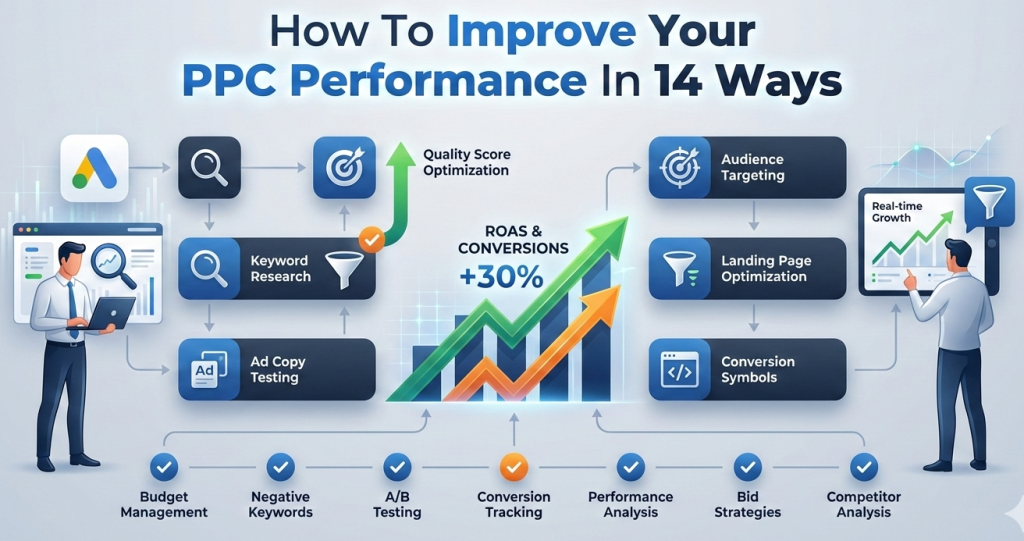
Consistent PPC success isn’t built on assumptions or random tweaks; it’s driven by a structured, repeatable process. By aligning goals, data, intent, and testing, businesses can diagnose issues, unlock growth opportunities, and scale paid advertising profitably. Below is a proven PPC optimization framework with practical examples to turn strategy into results.
1. Define Clear PPC Goals and KPIs
Start by identifying your primary objective: qualified leads, online purchases, or demo requests. Then align campaign-level targets for CPA, ROAS, and conversion rate.
Example: Set a higher allowable CPA for prospecting campaigns and a lower CPA for remarketing, while reviewing performance by funnel stage to prevent misleading blended metrics.
2. Fix and Validate Conversion Tracking
Accurate data fuels smart bidding. Audit all tracking pixels, conversion events, offline imports, and deduplication settings. Track only high-value actions such as form submissions, calls, or purchases.
Example: Shift optimization from soft events like page views to true conversions to prevent low-quality clicks from distorting automated bids.
3. Restructure Campaigns by Search Intent
Segment campaigns by branded, competitor, and non branded keywords. Use tightly themed ad groups and separate match types to maintain control and relevance.
Example: Promote top-performing queries into exact match campaigns with dedicated budgets and add negatives to eliminate keyword overlap.
4. Align Ad Messaging With User Intent
Your ad copy and landing page must speak the same language. Focus each ad on one core benefit and one strong CTA.
Example: An ad highlighting “Same Day AC Repair” should land on a page with the same headline and a single “Schedule Service Now” CTA to improve both CTR and conversion rate.
5. Improve Bid Strategy Precision
Use automated bidding where data volume supports it, and manual bidding where signals are limited.
Example: Run tROAS on high-volume ecommerce campaigns while maintaining manual or eCPC bidding on niche keyword groups until performance stabilizes.
6. Reallocate Budget Based on Marginal Performance
Move spend away from segments with rising CPA and stagnant volume toward campaigns showing scalable returns.
Example: Reduce budget on broad generic keywords and reinvest into exact match terms still losing impression share due to budget limits.
7. Optimize Landing Pages for Conversions
Ensure message continuity with a clear H1, fast mobile load times, minimal form fields, and visible trust signals near the CTA.
Example: Replacing sliders with a single value-driven image and reducing form fields from seven to three often produces a measurable lift in conversion rate.
8. Expand and Refine Search Terms
Analyze search query reports weekly to identify profitable queries and wasteful traffic.
Example: Add high-intent queries as exact match keywords and block irrelevant terms like “free” or “templates” to reduce wasted ad spend.
9. Build and Layer High-Intent Audiences
Create remarketing audiences for past visitors, converters, and engaged users. Layer audience insights by device, location, and time.
Example: Increase bids for high LTV regions on retargeting campaigns while reducing bids during low quality time windows.
10. Test Ads With a Scientific Method
Test one variable at a time: headline, CTA, or offer, and evaluate success based on conversions, not clicks.
Example: Compare benefit-driven headlines and measure performance using demo submissions before scaling the winner.
11. Improve Feed and Ad Asset Quality
For e-commerce PPC, optimize product titles with brand, attributes, and variants. For lead generation, enhance ads with sitelinks, callouts, and structured snippets.
Example: Adding size, color, or model details to product titles can increase Shopping CTR and reduce CPC.
12. Adjust Attribution and Lookback Windows
Align attribution windows with your sales cycle and import CRM based offline conversions for better revenue tracking.
Example: Extending attribution from 7 to 30 days helps capture delayed conversions and prevents undervaluing PPC performance.
13. Build a Multi-Stage Retargeting Funnel
Use short-term retargeting for high-intent visitors and longer windows with educational offers for researchers.
Example: Serve demo ads within 1–3 days, then follow up with comparison or guide content after 7–14 days to avoid fatigue.
14. Scale Campaigns Strategically
Increase budgets gradually on winning campaigns while monitoring CPA and ROAS closely.
Example: Raise budgets by 10–15%, observe learning phase volatility, and scale further only after 3–5 days of stable results.
Drive Smarter PPC Growth With Installs Infotech
High-performing PPC is a growth engine powered by clean data, intent-driven structure, persuasive creatives, fast landing pages, and disciplined testing. At Installs Infotech, we design and manage ROI-focused PPC campaigns that reduce acquisition costs and maximize revenue.
Our team delivers transparent reporting, rapid optimization, and multi-channel expertise across Google Ads, Microsoft Ads, Meta, LinkedIn, and more. From advanced conversion tracking to scalable bidding strategies, every campaign is aligned with your business goals and budget.
Ready to outperform competitors and scale profitably?
Book a free PPC performance analysis with Installs Infotech and get a custom growth plan built for results.